
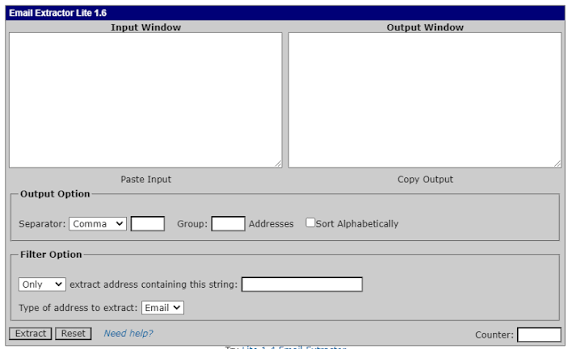
If you are researching email extractor 1.6, you are likely looking for a tool or software version that can identify and collect email addresses from digital sources. Email extraction can save time during legitimate research, lead management, and data organization, but it should always be used responsibly and in accordance with privacy and anti-spam requirements.
Understanding how email extractor 1.6 works, what it can realistically do, and where its limitations are can help users make better decisions before relying on extracted contact information.
What Is Email Extractor 1.6?
Email extractor 1.6 generally refers to a specific version of email extraction software designed to locate email addresses within accessible digital content. Depending on the application, an extractor may scan webpages, text files, documents, or other permitted sources and identify strings that follow common email-address patterns.
The usefulness of an email extraction tool depends heavily on its source handling, filtering capabilities, accuracy, and ability to remove duplicates. Older software versions may also have compatibility or security limitations that are worth considering.
For general information about responsible email communication, the Federal Trade Commission’s CAN-SPAM guidance is a useful reference for businesses operating in the United States.
How Email Extraction Software Works
At a basic level, an email extractor searches digital content for patterns that resemble email addresses. A typical address contains a username, an “@” symbol, and a domain name.
More advanced extraction software can process larger amounts of content and apply filters to improve the results. Features such as duplicate removal, domain filtering, export options, and customizable search settings can make extracted data easier to organize.
However, email extractor 1.6 should not be viewed as a guarantee that every discovered address belongs to an active or appropriate contact. An address can be outdated, incorrectly formatted, abandoned, or collected from a source where contacting the owner would be inappropriate.
Why Accuracy Matters
Poor-quality extracted data can create more problems than it solves. Invalid addresses increase bounce rates, while irrelevant contacts can reduce the effectiveness of legitimate outreach.
For professional use, extracted information should therefore be reviewed and verified before being added to a contact database or used for communication.
Common Uses of Email Extractors
Email extraction technology can have legitimate applications when users work with information they are authorized to collect. Researchers may use extraction tools to organize publicly available contact information, while businesses may use them to clean or structure existing datasets.
For example, a company researching industry publications might collect publicly displayed business contact information and then manually evaluate which contacts are relevant. Similarly, an organization could use extraction technology as part of a data-cleaning workflow.
The important distinction is between organizing legitimately accessible information and collecting personal information for unwanted bulk messaging. Responsible users should respect website terms, privacy expectations, and applicable laws.
Email Extractor 1.6 and Data Privacy
Privacy should be an important consideration when using email extractor 1.6 or similar software. An email address can constitute personal information depending on the context and applicable law.
Before collecting or storing contact information, consider why the data is needed, whether collection is permitted, and how the information will be protected. Users should also avoid collecting sensitive personal information unnecessarily.
The Information Commissioner’s Office guidance on direct marketing provides useful information about privacy and electronic marketing considerations in the UK.
Is Email Extractor 1.6 Still Useful?
Whether email extractor 1.6 is useful today depends on the software itself and the environment in which it runs. Older applications can face compatibility issues with modern operating systems, browsers, websites, and security standards.
Users should check the software’s original documentation, supported platforms, update history, and security reputation before installing an older program. Avoid downloading executable software from unknown sources simply because it is described as a particular version.
If the goal is legitimate business research, a modern data-management or prospecting solution may offer better security, filtering, verification, and compliance features.
Better Practices for Extracted Email Data
Extraction is only one part of responsible contact management. Data should be reviewed, deduplicated, and kept accurate. Businesses should also maintain clear records about where information came from and why it is being retained.
For website owners, a useful related topic is an internal guide about email marketing best practices, which can explain consent, unsubscribe requirements, and responsible audience communication. Another useful internal resource could cover data privacy and website compliance.
These resources can help readers understand the broader context instead of treating email extraction as a standalone marketing shortcut.
FAQs About Email Extractor 1.6
What is email extractor 1.6 used for?
It is generally used to identify email addresses within accessible digital content and organize the resulting information for legitimate research or data-management purposes.
Can email extractor 1.6 find every email address?
No. Results depend on the source, formatting, accessibility, and extraction method. Some addresses may be hidden, outdated, protected, or incorrectly identified.
Is using an email extractor legal?
Legality depends on how the information is collected and used, the source, and applicable privacy and marketing laws. Users should review relevant regulations before collecting or contacting people.
Should extracted email addresses be verified?
Yes. Verification and manual review can help identify invalid, duplicate, or irrelevant addresses before legitimate communication.
Is an older email extractor safe to install?
Not necessarily. Older software may have security or compatibility problems. Download software only from trustworthy sources and check its provenance before installation.
Conclusion
Email extractor 1.6 represents the type of software that can simplify the process of identifying email addresses from accessible digital information. Its practical value depends on accuracy, compatibility, data quality, and responsible usage.
Rather than focusing only on collecting the largest possible dataset, users should prioritize legitimate sources, privacy, data accuracy, and appropriate communication practices. Used thoughtfully, email extraction can support research and data organization without turning into unwanted or irresponsible outreach.