
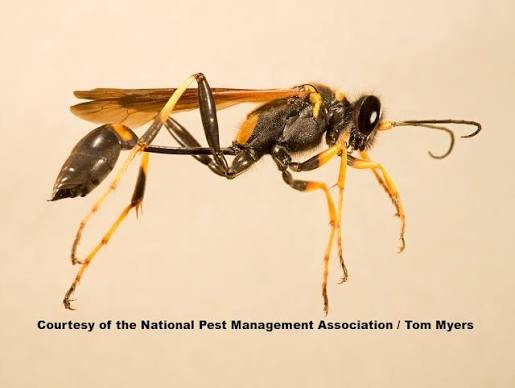
If you have noticed a small mud nest attached to a wall, porch, garage, or other sheltered area, you may have encountered a dirt dobber. The term is commonly used for certain solitary wasps that build their nests from mud. Although their appearance can make homeowners nervous, these insects are generally less aggressive than social wasps and usually prefer to avoid people.
Understanding the dirt dobber can help you identify its nests, learn why these insects appear around homes, and decide when simple prevention is enough. Their behavior is also surprisingly useful because many mud-daubing wasps help control other insects and spiders in the environment.
What Is a Dirt Dobber?
A dirt dobber, also commonly called a mud dauber, is a type of solitary wasp. Unlike yellowjackets and paper wasps, mud daubers generally do not live in large colonies. A female typically builds individual mud chambers where she lays eggs and provides food for her developing young.
The name “dirt dobber” comes from the insect’s habit of collecting wet soil or mud and using it as construction material. The finished nest can look like a small tube, cluster of chambers, or rounded collection of mud cells depending on the species.
Because these wasps are solitary, seeing one dirt dobber does not necessarily mean that a large nest or colony is nearby.
How Does a Dirt Dobber Build Its Nest?
Mud construction is one of the most recognizable characteristics of these wasps. A female collects small amounts of moist soil, carries the material to a protected location, and gradually shapes it into a nest.
Once a chamber is prepared, the wasp may place a captured spider or other small prey inside. She then lays an egg in the chamber and seals it with mud. The developing larva can use the stored prey as food after hatching.
Are Dirt Dobbers Dangerous?
For most people, a dirt dobber is not considered a major threat. These wasps are solitary and typically do not defend a large communal nest in the same way that highly defensive social wasps can.
Mud daubers can sting, but they are generally not aggressive toward humans. They are more likely to fly away when disturbed than deliberately pursue someone.
However, anyone with a known insect-sting allergy should still exercise appropriate caution. It is also wise to avoid grabbing or deliberately disturbing an insect simply because it appears harmless.
What Does a Dirt Dobber Eat?
Adult mud daubers commonly feed on nectar and other sugary sources. Their young, however, may receive a very different diet. Depending on the species, females can capture spiders or other small arthropods and place them inside sealed nest chambers.
This behavior makes the dirt dobber an interesting part of the natural ecosystem. By capturing spiders and other prey, mud-daubing wasps can contribute to natural insect population control.
According to the National Park Service, wasps play important ecological roles as predators and pollinators. For general insect identification and management information, homeowners can also consult University of California Integrated Pest Management.
Why Do Dirt Dobbers Build Nests Around Houses?
Buildings provide many attractive locations for mud-daubing wasps. Eaves, garages, sheds, porches, window frames, and other sheltered areas can protect their nests from rain and excessive disturbance.
A dirt dobber may also be attracted to locations where mud or water is readily available. If a property has exposed damp soil, standing water, or suitable sheltered surfaces, it may offer convenient nesting conditions.
Finding several mud nests does not automatically indicate a serious pest infestation. Their solitary lifestyle means the situation can be quite different from discovering a large colony of social wasps.
How Can You Prevent Dirt Dobber Nests?
Keeping potential nesting areas clean and protected can reduce the chances of mud-dauber activity. Repairing cracks, maintaining screens, removing old abandoned nests, and reducing unnecessary moisture around buildings can make certain areas less attractive.
If you regularly find mud nests around the same part of your property, identifying why that location is attractive can be more effective than repeatedly removing individual nests. Simple maintenance and habitat changes are often enough for minor activity.
For broader home maintenance advice, consider linking this article internally to your website’s home improvement, pest prevention, or outdoor maintenance content.
Should You Remove a Dirt Dobber Nest?
An old, inactive mud nest can usually be removed carefully with an appropriate tool while wearing basic protective equipment. However, an active nest should not be disturbed unnecessarily.
Before removing a dirt dobber nest, observe whether wasps are actively entering or leaving it. If there is significant activity, if the nest is difficult to reach, or if someone in the household has a severe insect-sting allergy, professional pest-control advice may be the safer choice.
Frequently Asked Questions About Dirt Dobber
What is a dirt dobber?
A dirt dobber is a common name for certain solitary mud-daubing wasps that construct nests using mud or soil.
Can a dirt dobber sting?
Yes, mud daubers can sting, but they are generally considered less aggressive toward humans than many social wasps.
What does a dirt dobber nest look like?
Mud-dauber nests can appear as small tubes, rounded mud structures, or clusters of individual mud chambers attached to sheltered surfaces.
Do dirt dobbers live in colonies?
Most mud-daubing wasps are solitary rather than colonial. Individual females generally build and provision their own nests.
Should I remove a dirt dobber nest?
An inactive nest can generally be removed carefully, while an active nest should be approached cautiously. Professional assistance may be appropriate when access is difficult or there is a significant allergy concern.
Conclusion
A dirt dobber may look intimidating when it appears around a home, but these solitary mud-building wasps are usually much less troublesome than their reputation suggests. Their unusual nesting behavior and role as predators make them an interesting part of the ecosystem.
Learning to recognize a dirt dobber, understanding its nesting habits, and identifying whether a nest is active can help homeowners make sensible decisions without unnecessary chemical treatments. In many situations, basic prevention and careful observation are all that is needed.
Which NIMS Structure Makes Cooperative Multi-Agency Decisions?