
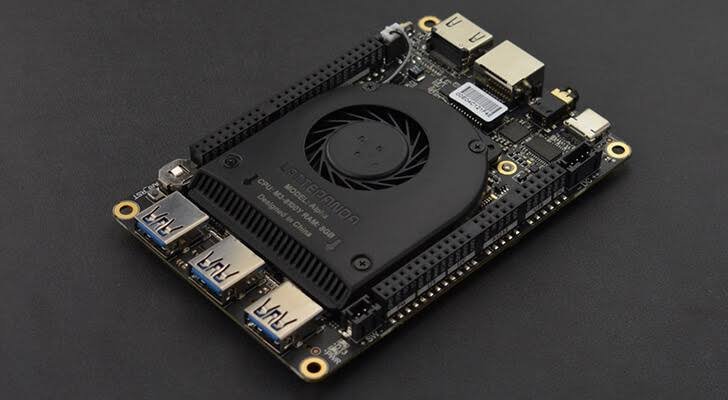
If you are looking for raspberry pi alternatives, you have more choices than ever. Raspberry Pi remains one of the most recognizable names in single-board computing, but different projects require different combinations of processing power, memory, connectivity, storage, operating-system support, and price.
The right alternative depends on whether you want to build a home server, media center, retro gaming machine, smart-home controller, programming project, or compact desktop computer. Some boards focus on affordability and compatibility, while others deliver considerably more CPU, GPU, storage, or AI performance.
This guide explores some of the most interesting raspberry pi alternatives and explains where each type of board can make sense.
Why Consider Raspberry Pi Alternatives?
The Raspberry Pi ecosystem is attractive because it combines compact hardware, Linux support, GPIO connectivity, documentation, and a large community. The current Raspberry Pi 5, for example, uses a quad-core Arm Cortex-A76 processor, supports up to 16GB of RAM, includes Gigabit Ethernet, USB 3.0, dual 4Kp60 display output, and exposes PCIe connectivity.
However, those features do not automatically make it the best board for every project. You might need more RAM, faster networking, built-in storage, stronger graphics, or a different processor architecture.
That is where raspberry pi alternatives become useful. Comparing boards before buying can help you avoid paying for features you do not need while finding hardware that better matches your intended workload.
Best Raspberry Pi Alternatives for Different Projects
Radxa ROCK 5B for High Performance
The Radxa ROCK 5B is one of the more powerful options for users who want desktop-class performance from a compact single-board computer. It uses the Rockchip RK3588 processor family with four Cortex-A76 cores and four Cortex-A55 cores.
The board also supports substantial memory configurations, fast networking, multiple display outputs, and hardware acceleration features. Radxa lists support for up to 8K video capabilities and a dedicated NPU capable of up to 6 TOPS.
For demanding applications, local development, multimedia projects, and experimentation with AI workloads, the ROCK 5B can be a compelling choice among raspberry pi alternatives.
Libre Computer Le Potato for Compatibility
Libre Computer’s Le Potato takes a different approach. It is designed around a Pi-compatible form factor and 40-pin GPIO layout, making it particularly interesting for people who want an alternative without moving too far away from the traditional Raspberry Pi-style development experience.
The board uses an Amlogic S905X processor, supports up to 2GB of DDR3 memory, provides HDMI 2.0 with 4K HDR support, and offers a Pi-compatible GPIO header. Libre Computer also emphasizes upstream Linux and long-term software support.
For basic servers, media applications, Linux experimentation, and educational projects, Le Potato can be one of the practical raspberry pi alternatives to investigate.
Orange Pi for Hardware Variety
Orange Pi boards are another popular category within the single-board computer market. The product family includes boards aimed at different performance levels, allowing users to choose hardware based on processing requirements and budget.
Depending on the model, Orange Pi can provide features such as higher-end processors, larger memory configurations, storage interfaces, and multimedia capabilities that may appeal to enthusiasts building more demanding systems.
Because specifications vary considerably between Orange Pi models, it is important to compare the exact processor, RAM, operating-system support, ports, and community resources before purchasing.
What Should You Look for in Raspberry Pi Alternatives?
The processor is an important starting point, but it should not be the only consideration. A fast CPU may be less useful if the board has limited software support or lacks the connectivity required by your project.
Memory is particularly important for desktop applications, containers, databases, and multitasking. Storage options also matter. Some boards rely heavily on microSD cards, while others provide eMMC, NVMe, or PCIe connectivity.
Software support deserves equal attention. Raspberry Pi benefits from an extensive ecosystem, so an alternative board should be evaluated not just by specifications but also by Linux distributions, documentation, drivers, community activity, and available accessories.
Physical compatibility can also matter. If your project already uses Raspberry Pi cases, HATs, GPIO accessories, or camera modules, a board with a different layout may require additional hardware or modifications.
Are Raspberry Pi Alternatives Worth It?
For many users, yes. The strongest reason to explore raspberry pi alternatives is that single-board computers are no longer limited to one dominant platform. Different manufacturers now target specific needs, from inexpensive Linux computers to high-performance multimedia and AI development boards.
Still, Raspberry Pi remains an excellent choice when community support, documentation, accessories, and predictable software compatibility are priorities. Its current product range includes traditional computers, Zero models, Compute Modules, and microcontrollers, giving users several options within the same ecosystem.
The best decision therefore depends on your project rather than a simple performance ranking.
Frequently Asked Questions
What are the best Raspberry Pi alternatives?
The best option depends on your requirements. Radxa ROCK boards are attractive for high-performance applications, while Libre Computer boards can be useful when compatibility and Linux support are priorities. Orange Pi also offers a broad range of single-board computers.
Are Raspberry Pi alternatives compatible with Raspberry Pi accessories?
Compatibility varies. Some boards provide similar GPIO layouts or physical dimensions, but HATs, cases, camera modules, and software libraries are not automatically compatible. Always check the manufacturer’s documentation before purchasing.
Can Raspberry Pi alternatives run Linux?
Many single-board computers support Linux distributions, but the exact operating systems and driver support depend on the manufacturer and model. Checking official documentation is important before choosing a board.
Which alternative is best for a home server?
A board with sufficient RAM, reliable networking, storage options, and good Linux support is generally preferable for home-server applications. The ideal choice depends on whether you are running file sharing, containers, media services, databases, or other workloads.
Is Raspberry Pi still worth buying?
Yes. Raspberry Pi remains a strong option because of its mature ecosystem, documentation, accessories, and software support. However, comparing raspberry pi alternatives can reveal better hardware for specialized projects.
Conclusion
Choosing between Raspberry Pi and its competitors is ultimately about matching hardware to the project. The best raspberry pi alternatives can offer advantages in processing power, memory, networking, storage, graphics, or price, depending on the model.
Before buying, compare the complete platform rather than focusing on processor speed alone. Consider operating-system support, community resources, connectivity, power requirements, storage, accessories, and long-term software availability. With that approach, you can find a single-board computer that provides the right balance of performance, flexibility, and value for your specific project.